Someday

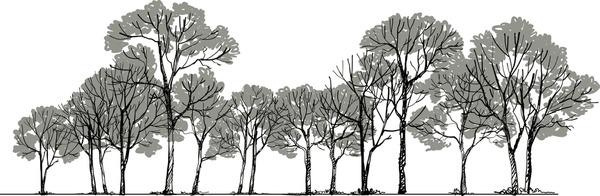
“The body is simply a shape; the heart is something else entire.”

They know the child is coming before they are even in view. Forests are strange that way, their ambitious age cultivating an array of skills only a true product of nature and time could possess. They hear the child, and they are prepared for them, as they always are, the child’s presence a promise almost as consistent here as the rain that keeps the forest nourished, as the sun that rises and eventually falls, as the moon that follows in the sun's path.
Children don’t run, they fly. Uniquely agile in a way an adult could never be, with dense bones and pre-set motions that render them incapable of the same careless fluidity a child’s frame allows. The child flies. Whippet fast. They arrive with a crash, feet missing steps, missing shoes as unprotected heels leave indents in the forest floor—the only surviving evidence of their passage. Moss and black loam become tart-scented leaf detritus as they duck between a tight-knit family of gums, pressing to their trunks, clingy bark catching at clothing, scratching at skin; claws that try, but cannot hold them.
Stop, the forest protests, but the child pulls themself free, shooting further into the depths.
Animals scatter at the signs of calamity, disturbed from their daily activities, retreating into the trees fortified protection, a natural barracks descending the embankment, guiding the child’s otherwise wayward path.
The child only slow as the ground becomes treacherous, the once flat terrain becoming sloped and unsteady, careening downwards towards places not yet explored. Breathing is a difficult task, large gulps of crisp air taken into underdeveloped lungs, pressing forcefully down onto a body already chockfull of feelings. Secrets, secrets, secrets. They are too small a thing to house so many. They feel heavy with the heft of them, knees weak where only moments ago they had felt strong, so young and vital and invulnerable.
When they finally come to a stop it’s with a trip, their feet halting moments before the rest of their body has the chance to catch up, roots grabbing hold where the branches and bark had failed. Their palms sink deep into the ground, soil swallowing their fingers, grazing their palms. For the average child this would sting, in that childish way that small hurts do, worse in proportion, because they are yet to experience many things more painful than this. For this child it is but a slight dance with discomfort, the pain of the heart already immense enough to overshadow anything physical.
They hold themselves there, skin netted in grime, making their body as small as they feel, dirty hands cupping bare knees bright with weeping blood. Things are easier the closer they are to the floor, where they feel small enough as to not be seen. Insects had it easy this way, they think, small and insubstantial, so often overlooked, or flat out ignored. They can see them down here, the ants that march their own sound path, destinations known only in their own small world, single-minded in their purpose. Ants worried for nothing, wanted for nothing more than to feed their Queen and grow their colony. An ant had no secrets.
The child has many secrets, and the forest knows them all. Voiceless they have spewed the darkest and the lightest of all they have inside and then-some. Wordlessly they have given up all the things they could not and would not share with any other.
A forest is very good at keeping a secret. Most wouldn’t believe so, because not many people believe in a forest's ability to listen at all, but in truth, the forest is the very best place to hide your digressions, your blunders, your not-so-acceptable self-revelations.
If one stole a bar of chocolate from the shelf of the local supermarket, the forest would hide your regrets. If you unintentionally stained your mother’s favourite dress only to shove said mistake deep into the depths of her wardrobe, the trees would force this mistake even deeper into their grain, never to be found.
It is unusual, however, for one as young as this child to hold so many secrets.
Children are notoriously honest creatures, even so far as to be at their own detriment. They are whirlwinds of truth from which no one is safe. Secret keeping is a skill learned and mastered, so uniquely human it is no wonder the trees are this child’s most trustworthy confidants. It is why they come here when they feel they have nowhere else to turn, when the secrets threaten to seep from the edges, taking their own shape where others could potentially see. Sometimes they can almost see it happening themselves, like the shadows from the corner of the room, reaching out for recognition, for release.
The child stands to their feet, more careful of their footing now, as they slow to a pace that better matches the deep forest’s mucky ground. They’d left their shoes at the tree’s edge, beneath the shelter of a trusted log that had yet to do them wrong. Many shoes before them had been lost to the war of nature against nylon, and the child now knows better.
They prefer it here amongst the trees, their overworked heart calming with every step, the world feeling both cramped yet endless all at once. Here is an oak tree reaching high into the sky. Here is a tree stump, the ghost of what once was. Small magics that make the secrets feel almost insignificant, the voices quietened to a dull hush easily overlooked in lieu of birdsong and breeze.
Everywhere there are eyes: peering over granite outcropping, peeping from between disjointed foliage, gazing down from places far above their head. Some are weary, some are inquisitive, some are predatory. All are watchful.
Yet the child feels both seen and unseen, in all the best ways. These eyes do not judge them for their clothes, their hair, the skin they wear. These eyes see only a human, a blob of a being that neither the plants nor animals of the forest care to distinguish for its minute details. The child can be a blob, a blob is nothing, a blob does not have to explain itself to anyone.
Suddenly, breathing is easier.
It's cooler in the lowland, the deeper they go, where light touches nothing and shadows make way for a darkness one step deeper than most feel comfortable acknowledging. Most children would turn back at this point, spooked by the unknown, but this child trusts this forest, trusts the trees to have their back.
It is why it’s so surprising when the beast appears, charging from the underbrush at full tilt, the sound of it like something dredged up from the darkest of folklore: a chainsaw; rattling and popping, a baby’s cry; shrill and high, a car alarm; blaring and bright, impossible noises that should not have belonged to the forest at all. These were human noises, unnatural calamity that should never have existed here.
When it comes into view it is a frenzy of feathers and spite, and all at once the child knows the identity of their assailant, having learned about it from their brother, a lover of oddities and collector of facts.
The many-faced lyrebird, as clever as it is cruel. It’s trademark mimetism, a coveted art seen nowhere else with such faultless accuracy. Most times, one could hardly differentiate its song from the thing it intended to simulate, whether it be other bird species, wildlife, or people, even the occasional mechanical sound, machinery and camera shutters, engines and the like.
The lyrebird uses its own voice so rarely that for a very long time it was unknown whether the bird had a tune of its own at all. Impersonators, they called them. Impressionists and performers. They are the poets of the bushland, actors of their own accord, so closely interwoven with every added attempt that it is difficult to tell where the parody begins, and lyrebird ends.
The child knows nothing about poetry, but some could say they understand fakery well enough, being somewhat a practitioner themselves. As with all good apprentices however, they are both awed and terrified of the master’s skill, and so the Lyrebird’s presence is to them a thing of nightmares.
‘Mimic mimic mimic,’ the Lyrebird screams, a voice that is part their mother, part themself. A voice that is harsh and galvanising.
The child, uncharacteristically brave, takes a menacing step forward, defensive. The Lyrebird reacts immediately, rearing up with shrill cry, feathers ruffled full. Momentary victory is quickly stripped away as the Lyrebird takes offence, stepping towards them on the beat of its outstretched wings. The child reels back, hands reaching to block out the monstrous bird’s blaring call. They stumble, feet failing them at the worst of times, their balance falling short as they begin to fall themselves. Their hat flees when they cannot, long, sandy hair coming free, framing their obvious terror.
‘Mimic, mimic, mimic.’ The Lyrebird proclaims, advancing on them all the while.
‘I’m not!’ the child cries, feet kicking up bark and topsoil in their attempt to scramble back.
‘Mimic, mimic, mimic.’ –fearsome and insistent.
Their knees wobble as they push themselves to their feet once more, never letting their eyes falter. The Lyrebird screeches: sharp, feminine, and familiar, its plumes dancing with every step.
‘I’m sorry,’ the child pleads, ‘Mummy, I’m sorry, I’m sorry, I’m sorry.’
The world goes silent, but not for them, the Lyrebird has frozen in place, beady eyes dreadfully wide. It makes a hasty retreat, fearful of something unseen. Desperately, the child does the same, darting for the treeline at the first opportunity.
Salvation, unsurprisingly, comes in the shape of a tree, a Strangler Fig. A colossus thing, higher than even the canopy, wider than is even imaginable. It’s hollow, a skeletal being with an open maw, that would have been intimidating if it had not been inviting a much-needed sanctuary.
The Strangler Figs were glorious things, both in their sheer size and beauty, but also in their horror. A product of their lightless habitat, the Strangler Fig takes its name from its parasitic nature, as instead of beginning its life in the ground like most others, it finds its seeds spread from tree to tree, growing itself from centre stage, where its roots both develop downwards along the trunk of its host to eventually find the ground, whilst equally striving upwards towards the sun, enveloping its victim in an interlaced trunk system from which the Strangler Fig easily draws all the nutrients it needs from the other, until death becomes evident, and all that is left of what once was is the Strangler Fig, an exoskeleton of survival and destruction.
The hollow smelt of decay, the phantom of the tree the Strangler Fig had wrung dry to keep itself alive, warm, and musty, like the earth itself. It was a comforting smell. It made the child feel safe. Wrapped within the tree’s embrace, the child almost feels like a caterpillar within a cocoon, sleepy and suspended, as if lying in wait.
What was that thing they did? They’d learnt it in school not long ago.
Metamorphosis.
A large word. One, two, three, four, five syllables. Far more syllables than any word ought to have when taught to a child who hadn’t yet conquered spelling words more complicated than friend, or phone, or feelings.
Met-uh-mawr-fuh-sis.
Such a brilliantly complicated way to describe the process of change. From one thing to another, without ever being able to tell its origin. An impossible form of magic to most children. A promise to others.
“Now children, what is the caterpillar doing inside it’s cocoon?”
“Changing.”
“Yes, but what’s the special word?”
“Metamorphosis.”
What a tempting idea; to curl up snug and tight within oneself, protected and reassured, a home of one’s own creation.
Maybe if they stayed here long enough, arms wrapped around knees, wrapped within the hollowed-out cavity of a long-forgotten tree, consumed by the Strangler Fig as they feel consumed by the reality of their very shape—then quite possibly over time they could try it out themselves.
Metamorphosis.
If they could change, what would they become?
If only, if only, if only.
The inside of their belly is the underside of a fallen tree, squirming and worming, creeping, and crawling, an independent ecosystem too large for their too small body. Slippery slugs, fowl-scented stink bugs, waxy skinned caterpillars, restless slippery worms, shiny black beetles of many kinds. Mothers and fathers. Babies and brothers. Sisters, aunties, uncles, and cousins—all of them ceaseless in their movement and growth. Their energy filling them, overwhelming them, and discharging itself as emotion, escaping from their eyes in the form of tears.
It begins as a trickle; one drop becomes two, becomes three, becomes an interspersed drizzle as they climb their way down the slope of the child’s face, greeting the ground in great, dramatic splashes, denting the dirt in their image, a fluent marriage between liquid and earth that quickly begins to take shape, a stream forming.
The Earth smells damp this close to the floor. Water from above (rain); water from below (ground); water from their eyes (tears). Moisture drawing their clothes tight to their skin, an icy embrace no less uncomfortable when ignored for the more pressing feeling of their lingering fear. It is because of this fear that they do not notice their river’s conception, at least at first. They continue to cry, and the tears cut a path through plant rot, through soil, through each of their defences—of which they do not have many, as children hardly have any reasons to be defensive in the first place.
Human emotion can be very dangerous in high quantities. A fact these trees—
ancient Gods of an Earth untouched, but forever vulnerable—know all too well.
They are loving, but weary, as is expected of them. They know if left unattended the child would drown this place, their unmetered tears reducing the valleys to lakes, the lakes to oceans.
Every day that passes they hear whispers overhead, from birds passing by, from the winds that have touched all the places the tree’s roots will never reach. They know of all the ways in which humans have begun to doom themselves and others. They’ve heard of the ways the seas rise and those engulfed by her merciless embrace. This will not be them.
They rise to action.
“Hush hush,” whisper the trees, ever nurturing. They are well practised in this by now. They know this child’s secrets and so they know parts of them that no one else does. They know their fears, their vulnerabilities, their monsters, and with this they know how it is to defeat them, but not the means. They will require outside intervention. They raise a call-to-action.
It comes quickly, because just like the trees, they had been watching, but like secrets they so often existed only within the back-corners of the mind, coming out only when absolutely necessary.
Because secrets can be good things too, like Santa Claus, or a surprise trip to a destination well-beloved, meant to make us happy. A secret kept so that fantasy can live. They are this kind of secret, one the forest guards close to its chest, entrusting it to very few.
A tiny sound like wind-chimes, far off enough as to nearly seem imaginary, fills the air within the tree, sneaking in through every gap, flowing amongst the twists and tangles of the Strangler Fig’s limbs, drying the child’s tears almost as quickly as they had come.
The child looks up, noticing only then the impact of their sorrow, the canal they had carved with its ferocity. Shocked and childishly curious, they emerge, fumbling along the edges of their makeshift ravine, its path a venture just distracting enough as to make their pain irrelevant.
The water has made the land its own, jumping over rock’s once hidden by litterfall, barrelling through saplings, so sure of its intentions. The child feels something inside them jumping too, wishing so desperately to know their path as well as this steam knows its own.
When they reach the climax it’s at a pool, a perfectly circular body of water no bigger than their body lying down, which is not very big at all. The water is still coming, though, its progress down the slope slower than their own, and it grows with every moment. Irregardless the child approaches, peering in.
The water is surprisingly clear, the bottom of the pool visible in all its glory, and despite what one would assume, it is not leaves, or muck, or sticks that line the base, but a shock white pebbles that almost seem bounce with colour, taking what little light they can find from the canopy and painting themselves in dazzling refraction.
Mesmerised, the child tries reaching in, wishing to pull a pebble from the depths, only to find themselves stopping, their fingers grazing the water’s surface, distracted by their own reflection—or more accurately—what appears to be not their own reflection. This shape is larger, broader, masculine. It is their father. Then it is their brother. Then it is someone they know but do not know. Then it is all these people at once.
Their heart is a lightning quick hummingbird, beating a frantic, relentless song against the inside of their chest. Shame is a tricky and painful thing that pulls their eyes away at last.
It’s as they step back they notice that the pool’s outer edge is lined in dots of white, that upon further inspection are not the same pebbles from within, but a perfect ring of mushrooms, so perfect in fact, that it is almost as if the water had found its way here on purpose, filling the centre of the ring in the same otherworldly way that their tears had come to create it.
The child knew mushrooms such as these—no, not mushrooms, but Toadstools, something rather similar, but ultimately different. At home they come after a long rain, popping up overnight almost like witchcraft. In the mornings they would often set out onto the grass, dew-damp and impossibly green, where they would seek them out, protruding white-capped and new from between evenly cut blades, and knock their tops off with swift kicks that were destructive, but satisfying.
(Occasionally too, they would kick the toads themselves, but that was a night-time endeavour and probably not something to brag about.)
This was not the same. Looking upon them, it felt as if unresting these particular mushrooms would be some type of monumental wrong. The presence of this ring, this perfectly shaped product of nature, was bigger than them, far bigger than anything they had ever known before.
The proof of this comes when they arrive, appearing almost from nowhere, popping up from the toadstools as if simply walking out their front doors.
The child bulks.
They recall stories of breadcrumbs and witches and child-sized stoves. Large-bellied wolves disguised as elderly women and fair-skinned queens devising apple-based schemes. Old lore with heavy warnings. Warnings almost too heavy as to be irrelevant in the eyes of a child whose greatest horrors already share with them residency and a name. This feels like a tale, a fairytale, because that’s what they are.
Fairies.
Beautiful fairies not unlike the ones depicted in the glossy pages of the many books gifted to them by their aunt over the years. All of them about fairies. All of them showcasing colourful, exotic illustrations of butterfly-winged creatures, beautiful and bright, some small as a petal, some large as a man, all of them dressed in flowers, garlands of autumnal leaves, golden wattle and bottle brush, draped in stolen silks, and wrapped in Strangler vines, in such a variety that it is difficult to fathom how they can all be the same.
The colours of them are impossible. The greens and browns and blacks of the forest, but also the blues and pinks and oranges of places unseen. The purples are the most glorious: an enigma of the eyes, a colour not of nature, but of human perception, a fact the child is too young to know, but human enough to feel somewhere deep within. The colours are as wild as the forest itself, untamed as nature. They dance just as the fairies do, a rainbow of radiance from which they cannot look away.
Their wings too, are a sensation: fine veined as eyelids, as flower petals held up to the light. They quiver and curl like insects; movement as bated as their breath. With one simple flutter, a fairy would be airborne, then floating daintily back to earth, reuniting with the circle in a parade of magic and wonder that could be nothing if not imaginary.
They feel their heart join them, aflutter and alive, though their feet remain grounded.
They feel the child’s hesitance, pulling them towards them not with words or hands or gestures, but with magic, a kinetic, invisible pull that has their feet shuttling from toadstool to toadstool, clumsy, but eager all the same.
The pool has overflown now, tiny streams like veins teetering off and meeting them where they dance. Their feet are greeted by this water, washing away the mud and grime, their tears now not a thing of woe, but of hope.
All at once the fairies speak to them, voices like birdsong, like wind. They overlap, but they do not overwhelm, a jacket atop a sweater, a blanket atop a sheet, comfort in the cold. They tell a tale of time and change. How time is like a stream in the way that it ebbs and flows. Currents that quicken and slow, disperse and rejoin. Forever moving, forever changing.
Rain clouds pick it up, throw it down somewhere else entirely. Systematic change, nature’s own fantastic kind of magic.
What was once a puddle, becomes the sea. Oxygen and hydrogen, elements reborn; possibility.
Change, change, change.
Water is change. Time is change. You will change. And who can stop you?
The child looks down at their feet, at the way the stream trickles and flows above their toes, around their ankles. Liquid change. Crystal clear possibility.
The child is still young, but they believe they understand, if not the full power of the words themselves, then at least the feeling, this sentiment of potential. The fairies, witnessing this, try to be more clear. One by one they take the child’s hands, forms shifting and changing before their eyes. One moment they are adult-sized, then child-sized, then impossibly small. Next they are short-haired, then long-haired, then they have no hair at all. Their faces are painted in coppers, then silvers, then gold.
‘Sometimes we are this,’ they say, ‘And sometimes we are this.’
The child should feel lost in this flurry of movement, in this process of constant metamorphosis, but oddly enough they feel at home, as if they finally understand.
“But at all times we are happy.”
And that is it, that very phrase, like permission from a parent they had not known they’d needed.
‘Someday, someday, someday.’ They tell the child, sounding earnest and true.
A sparkle of something, from fingers to feet, from heart to hairline.
‘What is this feeling?’ the child whispers, the first words they’ve spoken since entering the forest's reach.
The reply is not from the fairies, but from the trees, ‘Hope, child,’ they tell them, ‘That feeling is hope.’
And hopeful they are, as they let themselves get swept up in the madness of it all, in the freedom. The fairies place a crown atop the child’s heads where their trusted hat had once been, made of dandelions that shift from suns to moons, then drift away. Picked up by the wind, the crown is soon gone. Wishes lost to the faintest breeze.
They know then that the Lyrebird had been wrong, that their mother had been wrong, that their heart had been wrong in the way it had faltered from its true feelings, that this secret was not wrong at all. The child is not fraudulent, merely slow growing. After all, a sapling is but only a sapling to those who know no better—it’s final form but a mystery until time and change brings forth a tree.
The child emerges from the forest sometime later, not quite something different, but close to it. A promise of possibility fitted tight into the cramped place where secrets are kept, a perfect fit.
‘Someday,’ they remind themselves as the forest hears them go, ‘Someday, someday, someday.’